Friday, July 28, 2017

5 new directions for biometric technology

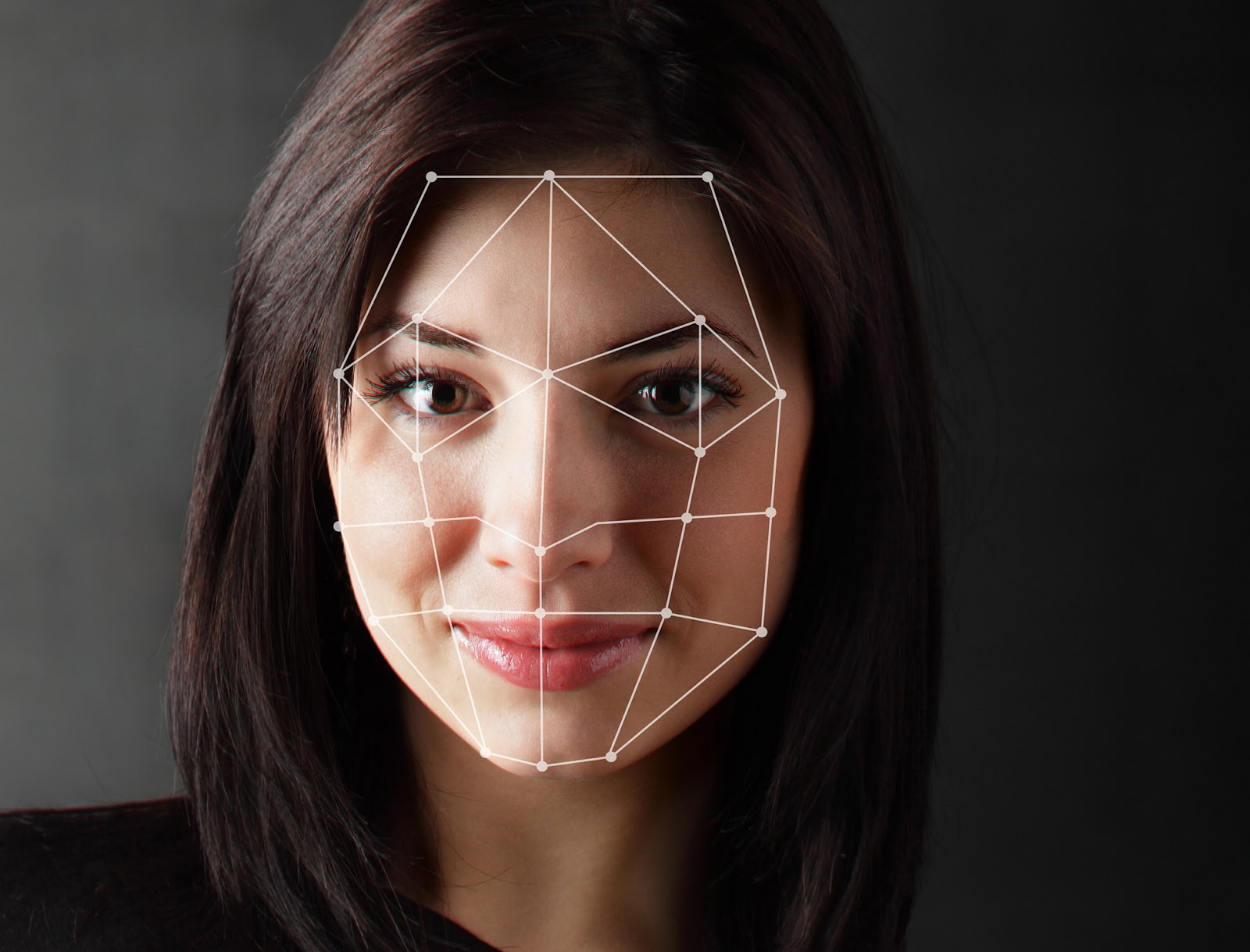
Photo showing a facial recognition scan of a woman's face.


Fingerprints and facial scans are now commonly used for mobile security, ID cards and banking. Other biometric authentication methods such as full palm prints, vein and voice recognition, keystroke recognition and even DNA sequencing are starting to see use with mobile devices, banking, and applications such as driver’s licenses and passports. Smartphones account for about 90% of biometric technology use. Add in tablets, notebooks and smart bank cards, and that figure is closer to 99%. The use of biometric technology is growing and being adapted to new applications. Here are 5 you may not be aware of.

Automotive Personalization
Luxury car makers are experimenting with biometrics technology such as gait recognition (the way one walks) for anti-theft security checks before unlocking or starting cars. New uses for biometrics include personalizing the driver’s environment. Gentex has created a rear view mirror with retinol scanner that will adjust the seat or steering wheel to the driver’s preference, queue up the user’s music preferences and more. 

The Internet of Things and Retail
Besides automobile biometrics, huge potential biometric growth exists with The Internet of Things (IoT). IoT is basically the concept of connecting any device with an on and off switch to the Internet (and/or to each other). Biometrics is on its way to being used to power meters on a house, or a whole security system. Daniel Ashraf, senior VP of biometrics for Gemalto, states “With the evolution of interconnected rooms using online resources, identifying an individual on the other side of the network is crucially important.”

Biometrics can be used in a retail environment to manage the use of clerks working at cash registers, and for tracking a buyer’s interests and preferences in a store as they look at displays and specific items.

Shoe Fitting
An end is in sight for the discomfort of breaking in a new pair of shoes. Iovado is a luxury shoe company using a full 360 degree scan of your foot to help create hand-crafted shoes that fit you perfectly. The scan uses a smartphone app to create a 3D model of your foot in about 10 minutes. 

Traffic Stop Identification
Some police departments now have mobile fingerprint scanners that can prove the identity of a person stopped for a traffic violation when driving without ID. Not everyone's fingerprint is in the system, but as fingerprinting is now required for many type of jobs and applications, the database grows quickly. Also, a mobile fingerprint scanner may be used when suspicious or dangerous individuals are stopped while driving. Results are returned quickly, usually within three minutes. 

Biometric Dating
Biometrics is being applied to dating in all sorts of interesting ways. Some dating websites are using facial biometrics to determine a compatible match by reading facial features and emotional reactions. At least one software app tries to the verify whether your date is real or nor by using facial recognition to check other online social media and meet-up sites. This may become an essential “catfish” prevention technique. Another app checks your heart rate while considering potential dates to signal your attraction and readiness to connect. One can only imagine the creative uses of biometrics for matchmaking in the future.   


5 Uses for Biometric Technology You Didn't Know Existed

By Peter Brown, July 21, 2017, electronics360.globalspec | Industrial Electronics


A Simple Explanation Of 'The Internet Of Things'

By Jacob Morgan, May 13, 2014, Contributor, Forbes, Inc.


Friday, July 21, 2017

Consumer confidence growing in biometric ID for online payments

Photo of woman browsing online at coffee shop


American consumers are growing more confident in making online payments including using alternative currencies like bitcoin, and biometric authentication for transactions. Viewpost IP Holdings LLC, an e-payment company, surveyed 1,000 US-based consumers and found that overall, 80% supported the use of “futuristic” payment technologies, including sensor fingerprinting, retinol scanning, and facial and voice recognition.

Among the survey findings:
• 50% believe that fingerprint technology will be used for payment authentication in the next 10 years
• 35% see facial recognition as a key authentication technology within 10 years
• 31% see retinol scanning as a viable payment technology
• 18% see themselves using voice control technology for payments within the next 10 years
• 32% trust facial recognition for securing electronic payments

People are willing to embrace a more convenient, easy payment system – but trust in a mobile payment system remains a key issue. With sensational reports of data breaches, who do you trust with your fingerprint, retinal, facial and voice biometric data? Storing your thumbprint on your smartphone is one thing, trusting a third party with your biometric data and personal finance information is a whole other trust issue.

Also interesting to note, 51% of people in the survey are being paid electronically via direct deposit. One third of the respondents believe paper checks will disappear in the next 5 years, and 83% believe paper checks will be gone completely in the next 20 years. Similarly, only 11% of respondents believe companies will bill consumers by paper in the future. Instead, 54% believe that companies will bill consumers directly through automatic payment by bank account or credit card, and 52% believe payments between companies and consumers will be made through mobile apps.


Many Consumers Expect Advanced Biometrics in Payments’ Future: Survey

By Kevin Woodward, July 11, 2017 on DigitalTransactions.net


Survey Finds Futuristic Payments Gaining Acceptance

By Allison Zisko, July 6, 2017 on HFNdigital.clom


Americans Becoming More Comfortable with Biometric ID

By Syndication, updated July 16, 2017 on TopTechNews.com

Friday, July 14, 2017

11 Myths about fingerprint sensors and mobile ID

Photo of smartphone authentication testing
Photo Credit: ElectronicDesign

Smartphones and PC’a are highly attractive targets for cyber crime. The use of biometric identification has grown to protect mobile device users, but misconceptions remain about the security of fingerprint sensors and multifactor authentication.


  1. It’s easy to spoof a fingerprint
    Actually, it’s technically and logistically challenging to spoof a fingerprint. The time and work involved makes this hack more likely to be attempted with a high value target. New anti-spoofing algorithms make it even harder to succeed in spoofing a fingerprint.
  2. Optical scanners are less secure than other scanners because they store the whole fingerprint image
    The current standard for smartphones and PC’s using optical scanners is to create a “template” of your fingerprint that stores detailed information on key parameters. The rest of the scan information is discarded. The template is encrypted and stored. If someone was able to extract and decrypt the data, it would be useless in recreating your original fingerprint image.
  3. A fingerprint image can be recovered and used to access a stolen phone 
    As in #2 above, the actual fingerprint image is not stored on your mobile device, so your actual fingerprint image can’t be stolen from your mobile device and used to create a biometric ID.
  4. Multifactor biometric authentication on mobile devices is hard/expensive to do
    Phones and mobile devices already have fingerprint scanners and cameras. Other features including iris and voice recognition will follow. It's true that creating an algorithm to combine multiple biometric data into a single “trust score” is difficult and complex – a mix of science and art. This technology is rapidly advancing and expected to be available in the marketplace later this year.
  5. Contextual factors aren’t enough for mobile security
    Contextual factors – location, proximity, room monitoring – aren’t enough to provide mobile security yet, but in combination with biometric authentication, they can provide a strong and user friendly solution. An example, a smart watch that stays unlocked until you take it off.
  6. Fingerprint sensors have to be in the home button, or on the back of smartphones
    New fingerprint sensors can fit within the power button on the side of a smartphone. New sensors can also work under the glass so that no physical home button is needed.
  7. Bio authentication is just for security
    Bio authentication can also be used to customize user preference settings. For example, a car rearview mirror with iris scanner can authenticate a driver, customize the rearview mirror, driver’s seat and steering wheel positions, and adjust the music selection to user preferences.
  8. Optical scanners are too big and power hungry to be used in fingerprint sensors
    Technological advances have made fingerprint sensors small and efficient enough for mobile devices, while at the same time new algorithms are allowing more refined and detailed data from the fingerprint scan to be stored in the fingerprint template.
  9. All fingerprint solutions are equal, so cost should be the deciding factor
    Fingerprint sensors are available for a range of different technologies, security levels, power consumption and software solutions. The solution is really two part: sensor and software working together to strengthen security. Going the cheapest route could possibly expose phone makers or parties in the mobile payment system to liability if security features are shortchanged.
  10. Biometrics are too difficult/expensive the business environment
    Biometric authentication is far more secure than usernames and passwords. It also lessens the need for frequent password changes, or calls to IT for support. Biometrics are easier to support and maintain, making them more efficient and convenient in today’s cloud based business world.
  11. Encryption is enough to protect a fingerprint template file
    Encryption protects the fingerprint template as it’s stored. The data must also be protected when it’s decrypted and tested for a match. Several solutions are available with a tradeoff between cost and security:
    • Match on host – the host processor tests for a match
    • Separate secure element  – the match is tested on a separate integrated circuit, usually with its own secure memory
    • Match in sensor – the matching algorithm is embedded in the fingerprint sensor itself. This allows for authentication before the system boots up for access/use.


11 Myths About Fingerprint Sensors and Multifactor Authentication

By Anthony Gioeli, Jul 11, 2017 for ElectronicDesign / Industrial Automation

Friday, July 7, 2017

Biometric ID for cars expected to nearly double by 2021

Photo of Gentex Biometric Rear View Mirror
Photo Credit: Gentex

According to a recent report from Markets and Markets, the market for biometric vehicle access systems for cars is estimated at $442.7 million, and expected to reach $855 millon by 2021. Currently fingerprint recognition holds the largest market share, but the use of iris scan is growing due to increased demand for safety features.

There are some issues in developing biometric security for the auto industry – technology moves at a fast pace, and the manufacturing design cycle for cars is long. Also, the car market is sensitive to price. The best solution may be the use of specialized smart phone apps for unlocking the car door or keyless ignition. That saves the cost of installing a separate biometric scanner in the car itself. 

Biometrics is more secure than a car key or fob, which can be easily lost or stolen, but biometric security is not perfect, it's still developing – so layered security and authentication is recommended.

How is smart technology currently being used to make cars more secure? 

An example of a current phone app is the Mercedes-Benz virtual key. An E-class owner can download a virtual key, save it in their near field communications (NFC)-enabled phone, and then hold the phone up against the car door handle to unlock it. 

Gentex, a maker of electronics components, has developed a high tech rear view mirror which uses iris scans for biometric authentication of the person in the driver’s seat. With a match, the system will start the car and automatically personalize the driver set by automatically adjusting mirrors, steering wheel, seat position, music favorites and more. Without a match, the security system can disable the vehicle.


Eye and fingerprint scanners in cars will double by 2021, report says

By Alison DeNisco, December 1, 2016, for TechReplic.com


How cars are going from smart to smarter

By Vishal Mathur, Jun 29 2017, published on LiveMint.com


Gentex Introduces Biometric Authentication System for Automotive Use

Gentex Press Release Jan 5, 2017 


Friday, June 30, 2017

New biometric vending machine to dispense restricted products such as alcohol and cannabis

Photo of American Green vending machine finger scanner
Photo: American Green

American Green has introduced a new vending machine prototype designed to allow the purchase of age, prescription or license restricted products. American Green and their technology partner PanPacific have worked non-stop over the last four years to bring this concept to market. The biometric verification technology used is the same used by the U.S. Military and large corporations requiring high levels of security.

Possible uses include dispensing alcohol and pharmaceuticals, including medical cannabis. Medical cannabis is currently available through vending at some dispensaries, but an employees verifies identity and prescription. The new vending system would allow patients greater privacy about their medical condition.

To use the new vending machine, a consumer would create an account using government ID and a copy of doctor’s prescription where needed. Authentication is made with a camera that scans the veins in one’s finger. Once ID is accepted, a touch screen is used to make product selection. A smart phone app has also been developed. A smart phone user after logging into their account and verifying ID would then show a QR code on their smartphone to dispense the product purchased. 

David Gwyther, chairman and acting president at American Green believes, “This is a huge step forward for smart retail and the automated sale of regulated products.” One day soon we may be able to use a smart vending machine to get a beer at a ballpark, casino tokens at a casino, or common pharmaceuticals without visiting the pharmacy.

American Green introduces biometric vending machine system for age-restricted products

 Published June 26, 2017 on PlanetBiometrics.com


Convenient cannabis: Vending machine checks ID

Zlati Meyer, May 11, 2017 for USA TODAY, Money


Thursday, June 22, 2017

Identity solution found for the world’s vulnerable population?

Photo of Turkish refugees in Chios, Greece, 2016


ID2020 is an organization whose mission is to enable the world’s “invisible” population to have a digital identity. An estimated 1.1 billion people have no official documentation of any kind. A disproportionate number of these people are women and children who struggle to access critical social services and benefits. The goal is to work with governments to implement standardized, secure, low-cost identity management solutions.

At ID2020’s “Platform for Change” Summit, recently held at the United Nations in New York, Accenture, Microsoft and Avanade presented a new identity platform solution based on biometrics and blockchain. Blockchain allows digital information to be distributed – but not copied – allowing a secure and credible way to access data such as biometric information.

Accenture has launched a prototype identity system using blockchain technology by Enterprise Ethereum Alliance, running on Microsoft’s Azure cloud computing platform. The system will use fingerprint or iris biometric scans to authenticate identity in a decentralized manner.

The United Nations has supported using biometric registration and background screening to process refugees. This allows countries the security of knowing who is within their borders. It facilitates programs that offer support and services, which helps keep refugees from falling into the hands of traffickers, and makes them less vulnerable to terrorist organizations.

The UNHCR (UN Refugee Agency) has been working to put biometric ID programs in place for refugees around the world, including Thailand, South Sudan and Chad. These programs have been put in place with government collaboration.

ID2020’s first goal is achieve “technical proof of concept and evaluating multiple avenues to scale" by 2020. By 2030, the goal is to provide “every person on the planet” a digital identity. ID2020 is a private and public partnership in support of the UN’s Sustainable Development Goal 16.9.


ID2020 Supporters Create Identity Solution Based on Blockchain, Biometrics

Alex Perala, June 19, 2017, on FindBiometrics.com


ID2020 Summit 2017, July 19, 2017, United Nations, NY


What is Blockchain Technology? A Step-by-Step Guide For Beginners


Monday, June 19, 2017

U.S. Citizens and Legal Residents in Australia, Accurate Biometrics can assist with your background checks

Photo of Sydney Opera House with 2016 postal stamps

Accurate Biometrics is  approved by the Australian Government to provide fingerprint based background checks for Immigration.

Accurate Biometrics is an approved FBI channeler providing  “Identity History Summary Checks” – Departmental Order 566-73, for individuals seeking a background check to live, work, or teach abroad. Accurate Biometrics is able to provide email delivery service of your Identity History Summary Checks to facilitate the process of American Citizens abroad in Australia.

Requirements for Immigration  are outlined on the Australian Government website

Details on obtaining one’s FBI Identity History Summary Check through Accurate Biometrics, are available on our website

For more information: 866-361-9944 or info@accuratebiometrics.com